

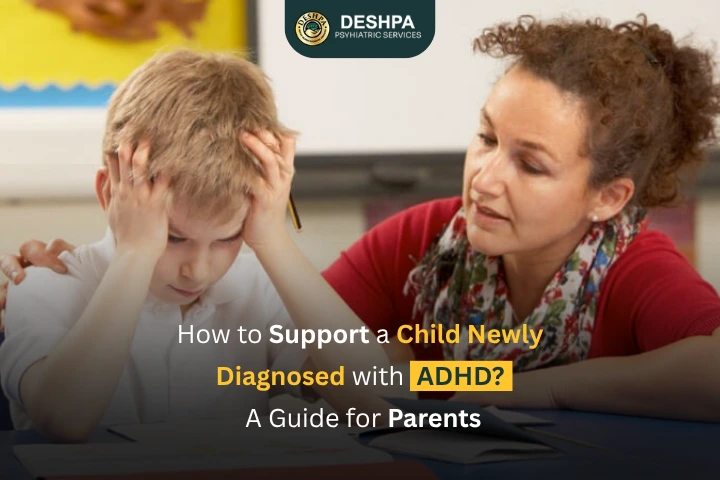
Your child has been diagnosed with ADHD. You’re likely to be leaving that appointment feeling a mix of emotions – likely with little clarity on what you’re supposed to do next. That’s completely normal.
Some of you have already been aware of what you were observing for years and it’s great that somebody finally said it.
Others are caught off guard and are doubting their parenting choices. It’s a lot to take in, one way or the other and it’s fine if you
don’t have this figured out yet.
First, Understand What You’re Actually Dealing With
ADHD isn’t bad behavior. It’s not a parenting error. It is a difference in the brain, the executive function part of the brain – the parts that control impulse control, working memory, attention regulation and starting and stopping tasks.
If your child forgets something you said 60 seconds earlier, it’s not on purpose. It just slipped their mind. If they keep playing a game after you’ve asked them to stop 3 times, it’s not defiant. When the “brakes” to the brain don’t work the same, changing activities can be a real challenge.
Don’t Try to Fix Everything in Week One
The internet will give you fifty things to do immediately. New diet, sleep schedule overhaul, therapy referral, school meeting, chore chart redesign. Some of that is genuinely useful. Doing it all at once in the first two weeks will exhaust you and overwhelm your kid.
Pick one or two areas where things are hardest right now and start there. Mornings are a disaster? Fix the morning routine first. Homework is a nightly war? Work on that. Don’t try to fix everything simultaneously before you even understand what’s driving the specific problems.
What Actually Works at Home
Routine is not optional for these kids
Children with ADHD rely on external structure since their brains don’t produce it automatically as other children do. They don’t do it for the fun of it; they do it because they have a routine. Morning sequence, homework time, same bedtime routine each evening.
Record and display the routine. A checklist on the wall is the same thing you’ve been trying to do – except a checklist won’t get frustrated or escalate or get into an argument.
Give one instruction at a time
“Go upstairs, brush your teeth, put your pajamas on, and bring down your water bottle” is four instructions. By the time your kid gets to the stairs they’ve retained maybe one of those. That’s not attitude. That’s working memory, and it’s genuinely limited in ADHD.
One thing at a time. Make eye contact when you ask. Check back in a few minutes rather than shouting from another room and assuming it happened.
Notice what’s going right
Kids with ADHD get corrected more than almost any other group. By the time they’re eight or nine a lot of them have already quietly decided they’re the problem, that they’re too much, that they can’t do anything right. You probably didn’t cause that. But you can push back against it.
Specific praise for specific things matters more than general encouragement. “You got ready without me asking this morning” or “you kept it together when your sister was being annoying” lands differently than “good job today.” Make it real and make it specific.
The School Piece
Your child will have a legal right to accommodations in school if they have an official diagnosis of ADHD. Many parents aren’t aware or don’t advocate for it. Start pushing.
The choices include a 504 Plan, which is a plan that allows for accommodations in a regular classroom, such as extra time on tests, preferential seating, permission to take movement breaks, or similar accommodations, or an IEP, which is a more involved plan that includes specialized instruction. While not all children with ADHD may be eligible for an IEP, most will be eligible for at least a 504.
After diagnosis, send an email to the school. Ask for a meeting. Submit the request in written form. Parents who record and follow up have more traction than parents who mention it once at pick up.
On the Topic of Medication
One of the first and most loaded questions parents ask is whether or not to medicate. Here’s some information you should know, but not the political rhetoric.
Stimulant medications are the most studied class of drugs in pediatric psychiatry. They are good when they don’t dull or alter a child’s character. Basically, they provide the prefrontal cortex with more of what it needs to do its job, which is to regulate impulse, attention and self-control. It is often described as their child actually finding a version of themselves that had been blocked for a long time.
Medication isn’t a magic fix, and it doesn’t teach skills. If a child isn’t used to managing their time, they won’t suddenly learn this once they start taking their drugs. It removes obstacles. There is still work to be done in that area.
Some children do not require medication. Some need it.
Work with a psychiatric provider who knows pediatric ADHD well.
Things Worth Stopping If You’ve Already Started
- Long lectures about responsibility and follow-through. They don’t land and they chip away at the relationship.
- Using their favorite activity as the first thing you take away as a consequence. That activity is often the one place they feel competent. Removing it repeatedly teaches them that the thing they love is a punishment vehicle.
- Comparing them to siblings or kids at school who don’t have ADHD. It’s not motivating. It confirms what they already worry about themselves.
- Waiting for things to get worse before getting support. Earlier intervention consistently produces better outcomes. If you’re reading this, you’re not too early.
You Need Support Too
Parent burnout is real and it affects everything downstream. Your patience, your consistency, your relationship with your kid.
Finding another parent who gets it, joining a support group, or even just talking to your own therapist isn’t indulgent. It’s necessary maintenance.
How DESHPA Can Help
At DESHPA in Virginia, Dr. Josephine Nada Bondje and the team work with children and families from the evaluation stage through ongoing treatment. This includes comprehensive ADHD testing, medication management, and building an individualized plan that actually fits your kid rather than a generic protocol pulled from a pamphlet.
DESHPA has two locations, Newport News and Norfolk, and accepts most major insurance plans including Aetna, Cigna, Anthem Blue Cross, Tricare, Medicare, Medicaid, and Sentara.
If you just got a diagnosis and you’re not sure where to go from here, that’s exactly the kind of conversation worth having with someone who does this every day.
Book a consultation today. You don’t have to piece this together on your own.
Phone: +1 (757) 826-0346
Website: deshpa.org