

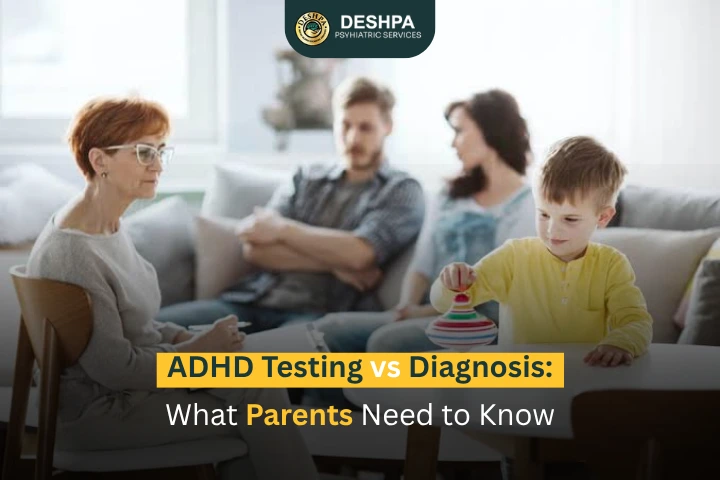
Raising kids is incredibly tough. You want nothing but the best for your kid, yet there are Tuesdays that leave you feeling totally wiped out. Muddy shoes left in the hall for the fifth day in a row, alongside evening math tasks that escalate into loud screaming matches. You see them trying. They make an effort to look you in the eye, but their attention slips away like dust. With chaos as the everyday default, you can’t help picturing ADHD as the reason our home is such a mess.
Go online searching for clarity and two heavy words pop up constantly. Testing. Diagnosis. A lot of panicked parents think these terms are identical, but they’re not. Testing is just gathering raw facts. A diagnosis, however, is that final, official medical answer handed to you at the very end. Grasping this basic difference calms your racing nerves, telling you precisely what to expect inside that clinic on that very big, important day.
ADHD testing is the weeks-long process of gathering behavioral clues, forms and observations from a child’s daily life, while a diagnosis is the final, official medical conclusion a doctor provides after analyzing that collected evidence.
What ADHD Testing Looks Like in Daily Life
Testing is not some quick pop quiz (the kind you used to take in middle school) and there is no magic blood test for ADHD. Instead, testing is a slow and careful process that gathers real clues from your child’s normal life.
A good doctor needs the whole picture to understand exactly how your kid acts at home, at the park and in a busy classroom. Kids act very differently depending on where they are right now, so the doctor must talk to the adults who see your child the most. This step takes a few weeks to finish up because parents and teachers need extra time to fill out all their paperwork.
The Main Parts of ADHD Testing
Doctors use several special tools during the testing phase to understand your unique kid.
- Parent Chats: You just talk. Sitting down, you share deep family health histories and those quirky bedtime routines that make your child completely unique.
- Teacher Checklists: Teachers see everything. Because they observe your child for hours, they can quickly fill out basic forms that show whether focus is sustained and whether classwork gets completed.
- Time With the Child: They play. The doctor spends real time connecting with your kid, using simple games (mostly fun) to gauge their true attention span.
- Behavior Rating Sheets: Numbers matter. You and the teachers answer quick questions, creating a clear score that helps compare your child against exact peers of that age.
What an ADHD Diagnosis Really Means
The endless testing is finally over and you reach the official diagnosis stage. This is not some guess, it is an actual medical answer delivered by an expert who meticulously reviews every single score, piecing together a massive, complicated puzzle. They need to see if these clues align with strict ADHD criteria, because one bad Tuesday does not equal a disorder. They want hard evidence of long-term behavior patterns. Finally putting a name to this exhausting daily friction (the specific kind that completely drains you) brings such incredible relief to burnt-out families everywhere. Having a very clear label means you can stop blaming your own parenting skills and start finding new strategies that actually work for your own amazing kid.
The Key Rules Doctors Check Before a Diagnosis
Doctors need exactly four clear signs to give a child a true diagnosis.
- Clear Signs: The kid shows real symptoms. These undeniable markers, like acting wildly restless or dropping focus (almost instantly), appear often.
- Six Months or More: This hard period isn’t temporary, it’s been going on for half a year.
- Two or More Settings: The problems happen in more than one spot, hitting both your house and school.
- Real Trouble in Daily Life: The behaviors make living truly hard by ruining grades, ignoring chores, or losing friends.
How Testing and Diagnosis Are Different
It really helps to keep the differences super simple for your own peace of mind.
- Testing is hunting for clues, while a diagnosis puts those clues together to show the big picture.
- Testing uses paper forms and long talks, but a diagnosis gives you a firm medical answer.
- Testing takes a few weeks to finish, whereas a diagnosis happens in one single meeting where the doctor explains everything to you.
Why Getting the Right Answer Matters
Many things look just like ADHD, so getting the right answer really matters for your child’s future. A kid who feels scared might fidget a lot and a child who cannot read well might ignore the teacher out of pure frustration. Sometimes, a child who gets terrible sleep will throw huge fits at home.
If a doctor rushes the process, your child might get the wrong label, meaning you waste precious time trying fixes that fail. Careful testing makes sure the diagnosis is spot on so you can build a plan that works well.
How DESHPA Psychiatric Services Helps Families
You are not alone in this, because at DESHPA Psychiatric Services (often called Destiny Helpers Psychiatric Associates), we assist families in finding real answers.
Our facility conducts incredibly thorough ADHD testing for children, teens and adults. We absolutely never hurry. Why? We sincerely wish to address your fears, review scattered school reports and discuss test scores without using complicated medical jargon. If a positive diagnosis emerges, our devoted staff stays right beside you.
- New Skills: Kids master valuable methods to organize assignments and remain tranquil.
- Parent Support: We provide excellent strategies for keeping frantic mornings far less stressful.
- Careful Medicine Checks: Should medication prove useful, we locate the proper dosage and monitor regularly.
We operate peaceful clinics in Newport News and Norfolk, Virginia, giving you a totally safe, quiet space to heal.
Taking the Next Step for Your Child
Seeing a child struggle is hard, but having good information brings hope for the future. Thorough testing compiles concrete data, so a diagnosis effectively highlights the exact path forward. You hold the unique power to rewrite their story today. Call a caring professional. Your incredible child can finally shine.
FAQs
Q. How do doctors test kids for ADHD?
Doctors talk to parents and teachers. They also play fun games with the child to see how well they focus.
Q. Does ADHD testing happen fast?
No, it takes a few weeks. Parents and teachers need time to fill out paper forms.