

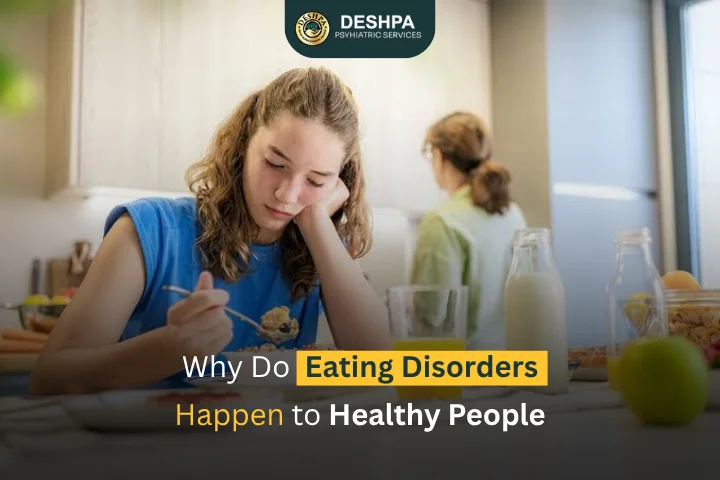
Surprising, that is the first reaction when an active person is diagnosed with an eating disorder, mostly because we assume bright, energetic individuals are immune to these struggles. They are not. These conditions ignore your daily gym routine and they certainly do not care about your age or academic grades. A successful parent juggling a corporate career might secretly fight a daily battle with food while looking perfectly healthy on the outside.
Why does this occur? Eating disorders are serious health problems. These concerns are not just nutritional. According to the National Institute of Mental Health (NIMH), these are closely linked to emotional regulation and how your brain responds to stress.
The Hidden Causes Behind Eating Disorders
You have a lot of power over your mental state through your DNA, so if your family tree has anxiety in it, your personal risk is automatically increased.
Your brain may simply respond to daily stress in a different way than someone else’s. Sometimes a harmless health kick turns into a dark obsession when a person decides to cut out sugar (which sounds like a very healthy choice at first). Soon their entire life becomes all about unbreakable food rules that govern their every move.
Often this is due to deep emotional pain and these hidden triggers include:
- Crushing daily anxiety that never seems to stop.
- Past trauma that was never fully processed or healed.
- Undiagnosed ADHD (Attention-Deficit/Hyperactivity Disorder).
Their mind simply latches onto food habits when the world feels too loud or chaotic.
How Perfectionism Plays a Big Role
Modern society demands absolute perfection and high achievers feel this heavy weight every single second of the day. They chase perfect bodies and they work endless hours to secure perfect career reviews.
This endless pursuit of control is highly dangerous because when everyday life gets messy, food becomes the one thing they can command entirely. Burning off exact calories feels like a tangible victory that they can actually measure.
(Many competitive athletes fall right into this exact trap without realizing it.)
They convince themselves that pushing their physical body to the breaking point proves mental toughness, but in reality, it masks extreme psychological distress.
The Role of Brain Chemistry
Balance, your brain desperately craves it.
Specific chemicals dictate your mood, sleep patterns and hunger cues to keep you functioning well. Serotonin keeps you calm, while dopamine fuels your motivation and pleasure centers. If these important neurotransmitters drop, your overall mental health crashes hard.
Perfectly healthy people suffer from chemical imbalances all the time because a severe lack of essential vitamins or intense chronic stress can drain the brain. When the brain runs dry, people often use extreme food restriction to feel a temporary sense of numbness.
According to the Centers for Disease Control and Prevention (CDC), understanding these chemical links is crucial for long-term health and stability.
Life Changes and Sudden Stress
Stress changes everything overnight.
A person with zero mental health history can develop an eating disorder after a massive life shift because the brain looks for new ways to survive. When difficult emotions threaten to pull you under, obsessing over a strict diet makes the mental noise stop temporarily.
Several major life events frequently trigger these dangerous habits:
- Moving away from a solid support system to a new city.
- Starting a highly demanding college program or new job.
- Navigating a painful divorce or relationship breakup.
- Losing a close loved one unexpectedly.
During these dark chapters, a person might stop eating entirely as the disorder acts as a physical shield against crushing grief.
Signs You Should Never Ignore
Hidden, that describes these early warning signals perfectly.
Because the person still looks fit and active, friends and family members often miss the flashing red lights entirely. You must look past their outward appearance to catch the painful internal struggle.
Pay close attention to these silent indicators:
- Skipping Meals: They invent creative reasons to avoid eating dinner with the family.
- Food Rituals: They chew a rigid set number of times or cut food into tiny pieces.
- Mood Changes: They act deeply irritable or anxious whenever food is present.
- Excessive Exercise: They force themselves to run or work out even when they are sick or injured.
- Body Checking: They obsessively check their reflection in passing windows or mirrors.
- Social Isolation: They drop out of fun social plans strictly to avoid eating at local restaurants.
If you spot these behaviors in someone you love, speak up immediately because early help saves lives.
Why Getting Professional Help Matters
Healing takes serious time and you cannot just command a struggling friend to eat a normal meal.
Eating disorders demand professional psychiatric intervention because specialized therapy helps the injured brain unlearn toxic rules. Proper medication calms the loud anxiety keeping the disorder alive, making professional support absolutely vital for a full recovery.
How DESHPA Psychiatric Services Can Help
At Destiny Helpers Psychiatric Associates (DESHPA), we understand how complex mental health really is. We know thick walls of anxiety, trauma and depression often hide severe food issues.
We are here to help you rebuild your life.
Led by Dr. Josephine Nada Bondje (DNP, APRN, PMHNP-BC), our team of experts provides exceptional psychiatric care throughout the state of Virginia. We don’t just treat surface symptoms, we dig deep to find the root causes of your emotional pain.
Here is exactly what we provide to guide your lasting recovery:
- Comprehensive Evaluations: We uncover silent conditions like ADHD or mood disorders.
- Custom Treatment Plans: Your personal roadmap to wellness is designed specifically for your unique brain.
- Anxiety and Trauma Support: We aggressively treat PTSD and daily stress feeding the disorder.
- Advanced Therapies: We utilize Ketamine Therapy, Vitamin B12 treatments and IV Infusion Therapy to boost brain health.
Our private offices in Newport News and Norfolk provide a welcoming, serene environment for you and your family. We proudly maintain a 97 percent success rate in managing complex psychiatric cases.
Contact DESHPA Psychiatric Services to book your confidential appointment today.
FAQs
Q. Can stress cause an eating disorder?
Yes. Big changes like a new job or losing a loved one can cause high stress. This can start sudden food problems.
Q. Do brain chemicals change eating habits?
Yes. The brain needs balance. If chemicals drop low, a person might stop eating to feel numb for a short time.