

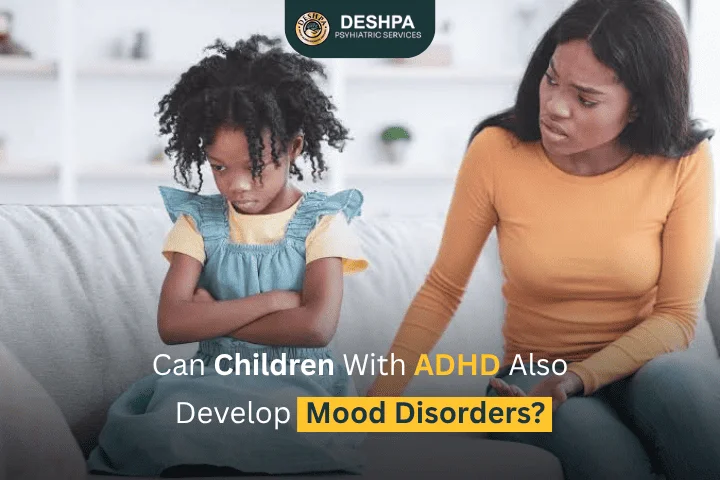
Parenting is the most demanding job you will ever take on. You see your child grow each day. You remember their happy smiles and wipe away their sad tears. You notice the tiny shifts. Sometimes, a parent can just sense when something is out of balance. You desperately want your child to be happy. But lately, you might see them acting drastically different from other kids. Children with ADHD often struggle to focus, have excess energy and can’t sit still. Intense sadness or anger in your child may signal a mood disorder, often seen in kids with ADHD. You’re not alone, we’re here to help.
Understanding ADHD In Children
First, let’s get real about what ADHD actually means. It represents Attention Deficit Hyperactivity Disorder, a lengthy medical term for a widely prevalent condition. Having ADHD is not a character flaw. It just means your child operates with a brain wired a bit differently. Countless highly intelligent, creative kids have ADHD. But asking them to sit completely still for an hour-long math lesson? That is pure torture.
These children frequently find it agonizing to narrow their focus. They forget their carefully packed homework. They speak quickly and often interrupt, driven by racing thoughts. They don’t do this on purpose, they just struggle to ease their pace. Thus, a normal school day can seem exhausting.
What Are Mood Disorders?
Next, we need to address mood disorders, which can be as changeable as the weather, sometimes perfectly sunny. Sometimes it rains, the wind howls and the sky gets dark. Everyone feels sad or angry sometimes, it’s part of being human.
A true mood disorder is vastly different from a temporary bad mood. For kids wrestling with a mood disorder, the rain simply does not stop, heavy clouds settle over them for weeks on end as massive, overwhelming feelings refuse to dissipate, making ordinary life nearly impossible. They might suddenly refuse to play with friends they used to adore. They cry constantly. Two of the most common heavy hitters here are depression and bipolar disorder. Depression weighs a person down, leaving them profoundly sad and physically exhausted. Bipolar disorder, conversely, triggers wild shifts in energy where a child might be thrilled one day, only to become furious and completely inconsolable the next morning.
How Do ADHD And Mood Disorders Connect?
Now we can look at the intersection. Parents often ask, “Does ADHD cause mood swings?” Can a child deal with both hurdles at the same time? Tragically, yes. Managing ADHD with bipolar is a difficult reality for many families.
Living with untreated ADHD is incredibly stressful for a young mind. Imagine getting in trouble at school constantly, day after day. You might start to believe that you are broken (which, to be clear, you absolutely are not). Over time, this chronic daily friction grinds down a child’s self-esteem. Left unchecked, this situational stress can easily snowball into a clinical mood problem.
There is also a biological side to this story. The brain uses special chemicals to send messages back and forth. One vital messenger is dopamine, which helps a child feel motivated and rewarded. Another key player is serotonin. Serotonin acts as a stabilizer to keep a person calm. When these chemical messengers get confused, a child might feel inexplicably sad or act out with hyperactive desperation, which often highlights the link between ADHD and irritability. There is even another chemical called GABA. It essentially tells the brain to relax. If GABA is running low, a child might feel chronically terrified or stay wound up like a tight spring.
Signs To Look for In Your Child
It can be remarkably tricky to untangle an attention problem from a mood problem, especially when they overlap. For instance, distinguishing bipolar disorder vs ADHD requires careful observation, but you know your child best. Here are distinct signs to watch for at home.
Common signs of ADHD:
- Having severe trouble sitting still in a chair.
- Starting projects but not finishing schoolwork or daily chores.
- Losing essential things like pencils or toys very often.
- Blurting out answers and talking out of turn in the classroom.
- Acting on impulse fast before ever thinking about the consequences.
Common signs of a mood disorder:
- Feeling deeply, unshakeably sad for many days in a row.
- Showing zero interest in fun games or hobbies they used to love.
- Sleeping way too much during the day, or suddenly not sleeping enough.
- Having an explosive, terrifying temper over incredibly small things (which can sometimes be mistaken for ADHD rage).
- Feeling like they are entirely worthless or a bad kid.
How DESHPA Psychiatric Services Can Help You
You do not have to carry this heavy burden by yourself. At Destiny Helpers Psychiatric Associates (DESHPA), we know exactly how to untangle these complex issues. As providers of top-level mental health care in Virginia, Dr. Josephine Nada Bondje and our dedicated team offer a calm, safe environment where we listen to your concerns and conduct a comprehensive assessment to figure out exactly what your child needs to thrive.
Our core services include:
- ADHD Testing: We administer thorough tests for children and adults. This helps us know for absolute sure if your child has ADHD.
- Mood Disorder Treatment: We actively treat depression and bipolar disorder. Navigating ADHD and bipolar disorder requires expertise and we work tirelessly to find the exact right treatment plan to bring back a happy mood.
- Expert Therapy: We sit down face-to-face with you and your child. We talk through the hard stuff and find great, practical ways to make daily life much easier.
- Medication Management: Sometimes, quite frankly, medicine is necessary. We meticulously pick the safest options to help your child feel much better fast.
Steps Parents Can Take Today
If you are lying awake at night worried about your child, please know there is a lot of hope. Here are a few simple steps you can take today.
- Talk to your child directly about how they feel inside, letting them know you love them fiercely no matter what happens.
- Keep a daily journal. Write down how your child acts each day. This creates a priceless roadmap that helps the doctor understand the exact nature of the problem better.
- Make a steady routine by maintaining consistent meal and sleep times every single day, which provides their brain with a predictable rhythm.
A Brighter Future for Your Child
Navigating an attention issue alongside a mood problem is undeniably tough. It is exhausting. The good news is it’s highly treatable. Every child should have the opportunity to excel, they simply require the appropriate resources to thrive. Seeking help shows your deep love. With the right assistance, your child can learn to navigate their strong emotions securely.
Are you prepared to move forward? Destiny Helpers Psychiatric Associates (DESHPA) supports your mental health. Get in touch via phone or visit our site to arrange an appointment today.
FAQs
Q. What signs should I watch out for?
Watch for signs like trouble sitting still, losing school things, feeling deeply sad for many days in a row, or having huge, scary tempers over tiny things.
Q. How can Destiny Helpers Psychiatric Associates help?
They are here for you in Virginia. They can test for ADHD, treat mood disorders like depression and bipolar disorder, provide expert therapy and help manage safe medicines.