

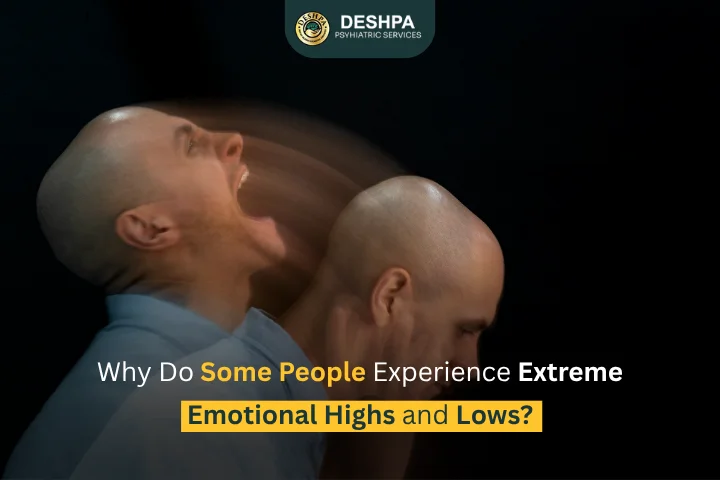
Have you ever felt extremely happy one day and then very sad the next? It’s normal to have fluctuating feelings.
However, for some, these shifts are intense. One day, they may feel unstoppable and full of energy, but soon after, they can feel deeply sad, tired and struggle to get out of bed. These mood changes can make daily life hard.
At DESHPA Psychiatric Services, we help people understand their feelings and get the care they need.
Let’s explore why some people experience extreme emotional highs and lows and when it may be time to seek help.
What Do Extreme Highs and Lows Feel Like?
An emotional high makes you feel invincible. Your heart beats fast. Your mind races with fun ideas. You cannot stop smiling. You might:
- Talk very fast
- Want to do ten things at once
An emotional low feels very different. You feel tired and sad. Nothing seems fun anymore. You might:
- Cry for no reason
- Get angry over tiny things
These feelings are like a see-saw that moves too quickly.
Why Do Some People Experience Extreme Emotional Highs and Lows?
There is not only one reason. Many things can affect your feelings:
Your Brain Has Little Messengers
Your brain depends on tiny chemical messengers called neurotransmitters. They calm down your feelings, energy and mind. When these chemicals are balanced, your mood is usually steady. But sometimes they can get disrupted. This can happen if you:
- Skip a meal
- Don’t get enough sleep
When that occurs, the messengers may get mixed up. For some people, this can cause stronger emotions.
Stressful Things Happen in Life
Life can be tough. Common stressors include:
- Upcoming tests
- Arguments with friends
- Moving homes
- Even positive events like birthday parties
Stress is like a heavy backpack. Carry it too long and your emotions fluctuate, tiring your brain and causing mood swings.
Insufficient Sleep
Sleep is essential for your mind. While you rest, your brain refreshes and gears up for the day. Without enough sleep, your brain can feel irritable. It finds it hard to stay emotionally balanced. You might:
- Lash out at others
- Cry easily
- Have sudden mood swings
Getting good sleep each night is crucial for stabilizing your mood.
Changes in Your Body
Your body experiences various transformations as you develop. These changes result from specific substances known as hormones.
Hormones can cause your emotions to fluctuate dramatically. This is especially common during:
- Adolescence
- The menstrual cycle in women
- Pregnancy
- The postpartum period
These changes are usual, yet they can still be difficult to handle.
Your Family History
Sometimes, mood changes can happen more often in families.
If someone in your family has strong mood changes, you may have a higher chance of having them too.
It does not mean it will definitely happen. Taking care of your body and feelings can help.
When Should You Ask for Help?
Everyone has happy days and sad days. That is normal. But you should talk to someone if your feelings:
- Make it hard to spend time with friends
- Make school or work difficult
- Feel too big to control
If this happens often, talk to a trusted adult or a mental health professional.
Sometimes, big mood swings may indicate bipolar disorder, characterized by extreme highs and lows lasting days or weeks. Other issues can also cause similar swings, including:
- Depression
- Anxiety
- ADHD
Fortunately, doctors and counselors can provide help.
What Can You Do to Feel Better?
You can manage these strong feelings. Take action now to help yourself. Try these simple steps.
Take Care of Your Body
Your body and your feelings are best friends. When you take care of your body, your feelings get better too. Here are some things to do:
- Stick to a daily sleep schedule
- Eat fruits and vegetables
- Run around outside
- Play with your pet
These little things add up to big changes in your mood.
Calm Down When Feelings Get Big
When you feel a big emotion coming on, stop and breathe. Take a deep breath in through your nose. Count to four. Breathe out through your mouth. Count to four again. Do this five times. It helps your brain calm down. You can also:
- Squeeze a pillow
- Draw a picture
- Listen to quiet music
Find what works for you.
Talk to Someone You Trust
You do not have to handle big feelings alone.
Talk to someone safe, like:
- A parent
- A grandparent
- A teacher
- A trusted adult
You might say:
- “I feel really sad today.”
- “I feel so angry I could burst.”
Sharing your feelings helps you feel less alone.
How DESHPA Psychiatric Services Can Help You
Sometimes, you need a little extra help to feel better.
DESHPA Psychiatric Services provides compassionate, evidence-based mental health care for adults, teens and children ages 6 to 14. Our skilled team listens to your unique story with care and respect. We ensure complete confidentiality. We understand that every person’s brain is different.
At DESHPA Psychiatric Services, expert providers offer:
- Careful evaluations to diagnose conditions like Mood Disorders or many mental health issues
- Personalized treatment plans tailored to your specific life needs.
- Professional medication support when needed
- Ketamine Therapy for some people who have not improved with other treatments
Achieve stability with proper care at DESHPA Psychiatric Services. Ongoing support helps you cultivate calm and enjoy a hopeful, balanced life.
We offer video calls for adults, so you can talk from your own home.
Moving Toward Better Feelings
Emotional ups and downs can be tough, but you’re not alone.
Many people have strong feelings like these. Having these feelings does not mean you did something wrong.
Start by learning about your emotions. Then talk to people who can help.
Support is available.
Contact DESHPA Psychiatric Services to reach caring mental health experts. Start your journey to emotional balance and a healthier life today.
FAQs
Can vitamin deficiencies cause mood swings?
Yes, low vitamin levels can affect mood. At DESHPA Psychiatric Services, we offer Vitamin B12 therapy to boost energy and brain function.
Can I get help from home?
Yes. DESHPA Psychiatric Services provides video appointments for adults to consult mental health experts from home.