

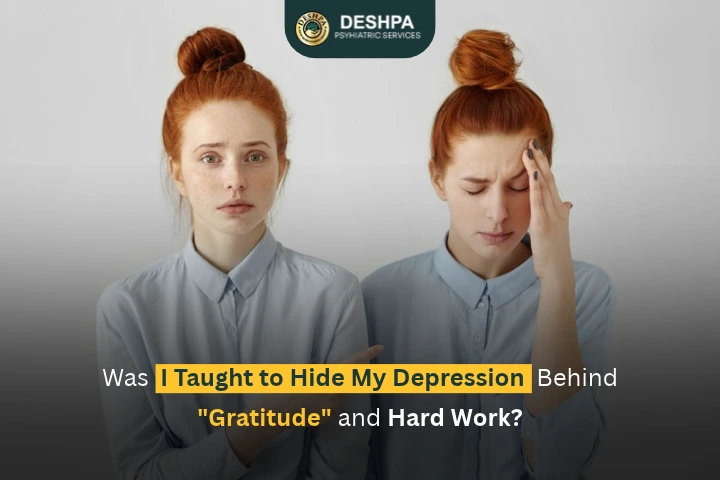
Many of us grew up hearing that we should be thankful for what we have and keep working no matter how we feel. These lessons often come from love, and they can build strong habits. But when sadness shows up, the same lessons can teach us to smile, stay busy, and say nothing. If you have ever felt empty while telling everyone you are fine, this post is for you.
Why Gratitude and Hard Work Can Become a Mask
Gratitude is a healthy tool, and hard work can bring pride and purpose. The trouble starts when they are used to cover pain instead of sitting beside it. A child who often hears that others have it worse may learn that sad feelings are rude or selfish. Years later, that child may become an adult who says “I am fine” without thinking and stays busy so nobody asks questions.
Messages That Teach Us to Stay Quiet
Many people learn these rules at home, at school, in faith spaces, or at work. You may remember hearing lines like these:
- “Be grateful for what you have.”
- “Keep going and do not complain.”
- “Strong people do not fall apart.”
- “Family problems stay inside the family.”
Signs of Hidden Depression
A person can look successful on the outside and still struggle on the inside. Hidden depression often shows up in quiet ways, such as:
- You finish every task but feel nothing when you succeed.
- You say yes to everyone because rest feels lazy.
- You feel guilty for being sad since you “have so much.”
- You feel tired all the time, even after a full night of sleep.
- You smile in public but feel numb or tearful when you are alone.
- You lose interest in things you once enjoyed.
Gratitude Is Not the Problem, Pressure Is
Studies suggest that simple gratitude habits can lift mood for some people, but they are not a cure for depression. Being thankful is good. Being told that your pain means you are ungrateful is not. You can feel thankful and hurt at the same time, and both feelings can be true. A kind way to say this is to use the word “and” instead of “but,” as in, “I am thankful for my family and I am still very sad.”
Why Pushing Through Can Make Things Worse
Working harder to avoid your feelings may feel safe for a while, but it often has a cost:
- Loneliness grows, because people cannot support a pain they cannot see.
- Guilt piles up on top of sadness, which makes the weight heavier.
- Burnout gets closer when work becomes a place to hide.
- Treatment gets delayed, so the depression may last longer than it needs to.
Small Steps to Stop Hiding Your Pain
You do not need to change everything at once. Try one step at a time:
- Name the feeling. Write “I feel sad today” without adding a reason to cheer up.
- Pair gratitude with honesty. Share one thing you appreciate and one thing that feels hard.
- Plan rest like a meeting. Put it on your calendar so it counts as real and important.
- Tell one trusted person the truth. Pick someone who listens without rushing to fix things.
- Track your mood and sleep for two weeks. These notes can help a provider understand what you have been going through.
How to Support Someone Who Always Says They Are Fine
If you love a person who works nonstop and rarely shares feelings, small moments of care can open the door. Ask “How are you really doing?” and then wait patiently for the answer. Try to avoid phrases like “at least you have a good job,” because they can make the person feel judged. You can also offer to sit with them, go for a walk, or join them at an appointment.
When It Is Time to Get Professional Help
Reach out if feelings of sadness or emptiness last for two weeks, or if you feel extremely tired and unmotivated. Depression is a medical condition that requires treatment. It is not a sign of being ungrateful, and it is not something people can get over on their own. It takes courage to reach out for help, and it means that you want to feel better. If you have thoughts of harming yourself or believe life is not worth living, call or text 988 or call 911.
Depression Treatment at DESHPA Psychiatric Services
Destiny Helpers Psychiatric Associates (DESHPA) is a mental health care practice founded by a nurse practitioner, providing high-quality care and support to families in Newport News, Virginia, and Norfolk, Virginia. Our team is committed to providing treatment, support, and services that are individualized and that address the physical and mental well-being of the entire family. Services include but are not limited to:
- A thorough psychiatric evaluation by a mental health care provider
- Management of psychotropic medications
- Esketamine, an FDA-approved treatment for treatment-resistant depression (TRD), provided under the supervision of a mental health care provider
- Transdiagnostic ketamine therapy in a medically supervised environment
- Other supportive services (PTSD, ADHD, bipolar disorder, etc.)
We accept most insurance plans. To check your insurance plan, visit our insurance webpage.
You Do Not Have to Earn Care
It is okay to feel grateful and still feel pain. You do not have to silence your pain forever to be strong. If this post reflects your situation, this is the beginning of your wellness journey. Reach out to DESHPA today at +1 (757) 826-0346 or schedule an appointment at deshpa.org. You deserve help and care, not just praise for how much you do.
FAQs
Q. Can a person feel thankful and sad at the same time?
Yes. Both feelings can be true at once. You can love your life and still hurt inside. Good things do not take away real pain.
Q. Why do people hide depression behind hard work?
Many kids learn to stay tough and keep quiet. They hear that work comes first. As grown-ups, they stay busy to block out pain. Hard work turns into a mask.
Q. Does feeling sad mean someone is not thankful?
No. Sad feelings are not rude or wrong. Depression is a real health issue. It does not mean you lack gratitude. No one should feel bad for being hurt.